
Gates of Hades by Pragmatic Play: How Dark Mythology Shapes Multiplier Slots
The modern slot market increasingly relies on recognisable narratives, and mythology remains one of the most устойчивых источников визуальных и механических решений. Gates of Hades by Pragmatic Play illustrates how dark mythological themes are not simply decorative but directly integrated into gameplay systems, especially multiplier mechanics. This approach reflects broader trends in 2026, where player engagement depends on the coherence between visual design, volatility, and reward logic rather than surface-level themes.
Mythological Narrative as a Structural Element in Slot Design
In Gates of Hades, the narrative is built around the Greek underworld, with Hades positioned not just as a character but as a functional symbol of control over outcomes. This aligns with how modern slots use mythology: instead of static storytelling, symbols are tied to reward triggers. The presence of infernal gates, fire motifs, and underworld guardians visually reinforces the expectation of high-risk, high-reward gameplay.
Pragmatic Play integrates mythology into the symbol hierarchy. High-value icons are typically associated with deities or powerful entities, while lower-tier symbols reflect more generic artefacts. This hierarchy is not случайна: it guides player perception of value and helps them intuitively understand which combinations matter most.
Another key element is environmental storytelling. Background animations, sound design, and transitions during feature activation create a sense of progression. In 2026, such coherence between audiovisual elements and mechanics is considered essential for удержание внимания игрока.
Symbolism and Player Perception of Risk
Dark mythology naturally aligns with volatile gameplay. In Gates of Hades, visual cues such as flames or разрушенные структуры сигнализируют о нестабильности результатов. Players subconsciously associate these elements with larger but less frequent payouts.
This connection between theme and volatility is supported by behavioural data across the industry. Slots with darker aesthetics tend to attract players who are comfortable with variance, particularly those seeking multiplier-based wins rather than frequent small payouts.
As a result, mythology here functions not только как декорация, but as a communication tool. It sets expectations before any spin is made, reducing friction between player intent and game mechanics.
Multiplier Mechanics and Their Integration into Theme
Multiplier systems in Gates of Hades are directly tied to the core theme. Instead of appearing as abstract numbers, multipliers are represented as manifestations of Hades’ power. This reinforces the idea that bonuses are not external features but intrinsic to the world of the game.
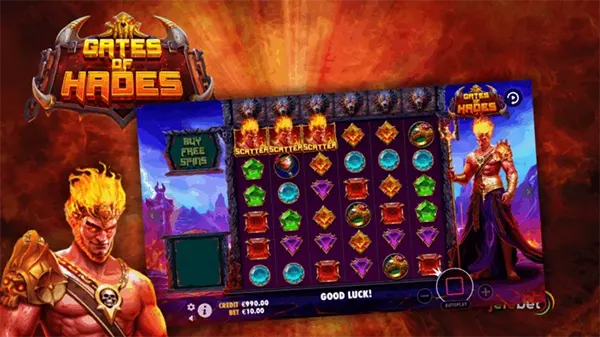
In practical terms, multipliers are often linked to special symbols or bonus rounds triggered by scatter combinations. During these sequences, visual intensity increases, aligning with the perceived escalation of stakes. This synchronisation between visuals and mathematics is a hallmark of modern slot design.
Importantly, multiplier stacking is used to create tension. Rather than delivering immediate rewards, the game often builds potential value over several spins. This delayed gratification model has become standard in 2026, particularly in high-volatility titles.
Volatility, RTP, and Multiplier Balance
Gates of Hades follows a typical high-volatility structure, where Return to Player (RTP) is balanced against the rarity of significant wins. Multipliers play a central role in this equation, as they allow developers to keep base payouts moderate while still offering large potential rewards.
From a design perspective, this reduces the need for frequent bonus rounds. Instead, a single well-timed multiplier sequence can define an entire session. This approach appeals to players who prefer fewer but more impactful moments.
It is also worth noting that multiplier distribution is carefully calibrated. Randomness remains a key factor, but probability weighting ensures that extreme outcomes are possible without being misleading. This balance is crucial for maintaining trust and long-term engagement.
Visual and Audio Design Supporting Gameplay Mechanics
The visual identity of Gates of Hades is built around contrast: dark environments combined with bright, high-intensity effects during winning sequences. This contrast is not purely aesthetic; it highlights moments of significance and guides player attention.
Sound design plays an equally important role. Low-frequency tones dominate the base game, creating tension, while higher-pitched effects signal wins or feature activations. This auditory layering enhances immersion without overwhelming the player.
In 2026, such integration of audio and visual cues is considered a baseline requirement. Players expect games to communicate information intuitively, reducing the need to interpret complex rules manually.
Consistency Between Theme and User Experience
One of the strengths of Gates of Hades is its consistency. Every element—from symbol design to bonus animations—supports the central theme. This reduces cognitive load, allowing players to focus on gameplay rather than interpreting mismatched elements.
Consistency also improves retention. When players understand how visual cues relate to mechanics, they are more likely to continue playing and return to the game in the future. This is particularly relevant for multiplier slots, where clarity is essential.
Overall, the game demonstrates how thematic coherence can enhance both usability and engagement. It reflects a broader industry shift towards integrated design, where narrative, mechanics, and presentation function as a unified system :contentReference[oaicite:0]{index=0}.